
Features
Ethanol blamed for soaring grain prices
Date: 2008-04-17 17:16:59.0
Author: Des Owen
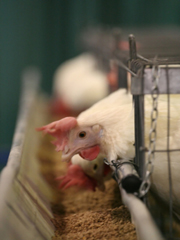
Corn makes up 2/3 of poultry feed
Biofuels are back in the firing line this week as rising grain prices reignite the old food versus fuel debate. Under pressure from increased costs, some food producers in the US are blaming the ethanol industry for recent price hikes, claiming they have been forced to cut back on production in order to cope.
Pilgrim's Pride, a chicken producer in the US, announced on Monday, 14 April 2008, that it will cut weekly production by 5% in the second half of 2008. CEO, Clint Rivers, claimed the cuts were necessary in light of soaring costs for feed ingredients, blaming the government's ‘misguided ethanol policy' for the creating a crisis in the industry that will flow onto consumers in the form higher food prices.
The main issue for US food producers like Pilgrim's Pride is the cost of corn. “Corn makes up two-thirds of the feed content” said Ray Atkinson, a Director of Corporate Communications at Pilgrim's Pride. Looking at the figures, it's easy to see why producers like Pilgrim's Pride are hurting. In March 2006 corn cost around US $2.24 a bushel, but the price has risen to almost US $5.50 a bushel in recent months.
Yet there are a number of other factors, other than ethanol, that are influencing the demand and cost of grain, such as corn. “It's not just a matter of higher demand for ethanol, but of higher demand for grain for many different needs. We're all seeing export demands increase, and corn export this year is predicted to be at a record high of 2.5 billion bushels” said Ken Colombini, a spokesperson for the National Corn Growers Association (NCGA) in the US. Brazilian President, Luiz Inacio Lula da Silva, echoed this view at a UN Food and Agriculture Organization (FAO) conference in Brazil yesterday, saying that improved economic conditions and increased demand from developing countries in Asia and Latin America was driving up food prices.
In a statement released by the FAO on April 11 2008, the UN acknowledged that increasing prices for grain on international markets reflected ‘steady demand and depleted world reserves', adding that the cereal import bill of the world's poorest countries is set to rise by over 55% in 2007/2008. But it's not just corn prices that are changing as a result of these demands. Rice prices showed the greatest increase and FAO blamed export restrictions by major exporting countries for the price hikes. Wheat and sorghum prices have also increased sharply and food riots have been experienced in a number of countries.
The FAO is responding by launching an Initiative on Soaring Food Prices that aims to boost production in poorer countries in the coming season. An anticipated growth in world cereal production in 2008 is expected to ease the situation in 2008/2009, but we are yet to see if this will result in a decrease in grain prices. “Many factors go into higher corn prices and the issue is more about whether it will be a long-term change in the industry (which has seen high prices before) or whether corn prices will decrease again” said Colombini.
In the interim, the NCGA maintain that enough corn will be produced to meet needs for food production and ethanol, and that the recent hikes in prices can't necessarily be blamed for production cuts. “We've always had a plentiful supply of corn for feed, and producers can use forward-contracting tools to ensure that they have a steady, affordable supply” said Colombini.
With cheaper grain and ethanol produced in Latin American countries, such as Brazil, perhaps the biggest issue for US food producer's is the determination of the government to support US produced ethanol through tax incentives and import tarrifs, which distort the market. “Our problem is the taxes and tariffs [for ethanol]” said Atkinson “They are creating artificial markets and preventing cheaper ethanol being imported from countries like Brazil”.
This article has not been tagged with keywords.